

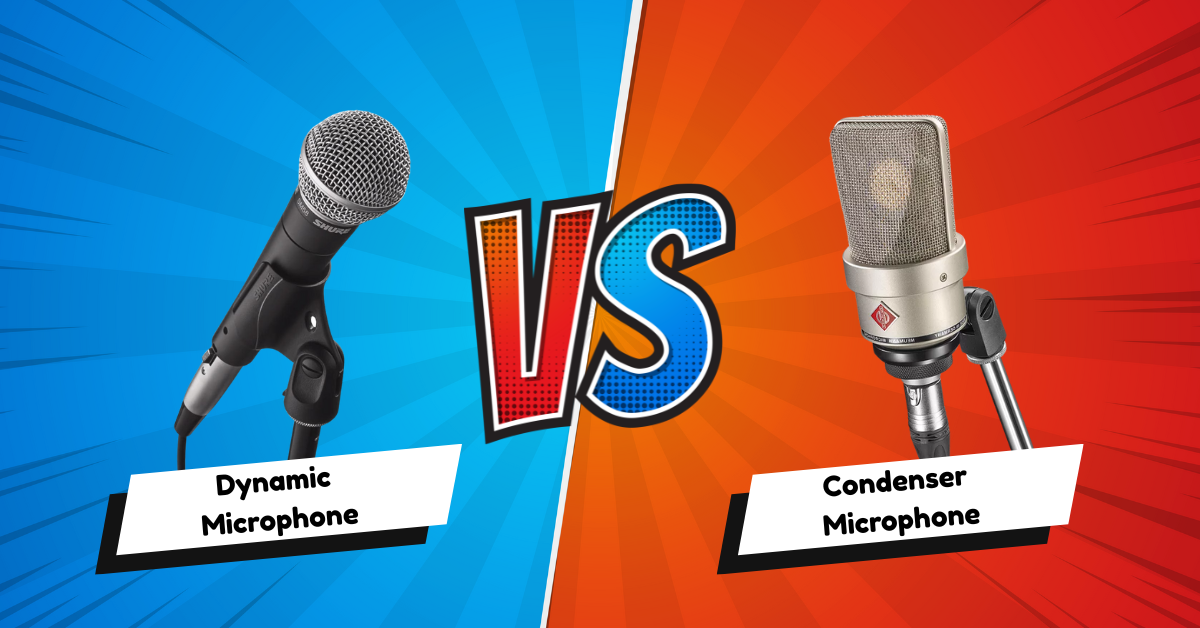
Microphones are an essential tool for musicians, podcasters, content creators, and audio professionals. Choosing the right microphone can make a significant difference in the quality of your recordings. The two most common types of microphones—dynamic and condenser—each have their strengths and ideal use cases.
In this blog, we’ll break down the differences between dynamic and condenser microphones, their applications, and which one is best suited for your needs.
Understanding the Basics: Dynamic vs. Condenser Microphones
Dynamic Microphones: Rugged & Reliable
Dynamic microphones use a moving coil and magnet to convert sound waves into electrical signals. They are known for their durability, high sound pressure level (SPL) handling, and minimal sensitivity to background noise.
Best Features of Dynamic Microphones:
✔ Built to withstand rough handling and outdoor use
✔ Less sensitive to ambient noise and feedback
✔ No need for external power (phantom power)
✔ Affordable and long-lasting
Best Use Cases for Dynamic Microphones:
🎤 Live performances & stage vocals (e.g., Shure SM58)
🥁 Recording loud sound sources like drums and guitar amps (e.g., Shure SM57)
🎙️ Podcasting & broadcasting in untreated rooms (e.g., Shure SM7db)
Condenser Microphones: Studio-Grade Clarity
Condenser microphones use a thin diaphragm and an electrically charged backplate to capture sound with greater detail and sensitivity. They require phantom power (48V), typically supplied by an audio interface or mixer.
Best Features of Condenser Microphones:
✔ High sensitivity and detailed frequency response
✔ Captures subtle nuances and crisp high-end frequencies
✔ Ideal for studio recordings and professional applications
✔ Available in large and small diaphragm variations
Best Use Cases for Condenser Microphones:
🎤 Studio vocal recordings (e.g., Neumann U87, Audio-Technica AT2020)
🎻 Acoustic instruments (e.g., Rode NT1-A, AKG C414)
🎙️ Podcasting & voiceovers in treated spaces (e.g., Rode NT-USB)
Dynamic vs. Condenser: Key Differences
| Feature | Dynamic Microphones | Condenser Microphones |
|---|---|---|
| Durability | Very durable & rugged | More delicate & sensitive |
| Sound Quality | Warm, less detailed | Crisp, detailed, & natural |
| Power Requirement | No phantom power needed | Requires phantom power (48V) |
| Sensitivity | Less sensitive, rejects background noise | Very sensitive, picks up fine details |
| Best For | Live performances, loud sources | Studio vocals, acoustic instruments |
Which Microphone Should You Choose?
🎸 For Live Performances & Loud Instruments:
Go for a Dynamic Microphone (e.g., Shure SM58, Shure PGA48 – durable, feedback-resistant, and great for stage use.
🎙️ For Studio Recording & Professional Vocals:
Choose a Condenser Microphone (e.g., Neumann TLM 102, Rode NT1-A) – delivers detailed and accurate sound.
🎧 For Podcasting & Voiceovers:
- If recording in an untreated room → Dynamic mic (e.g., Shure SM7B, Rode PodMic)
- If recording in a treated studio → Condenser mic (e.g., Audio-Technica AT4040, Blue Yeti X)
Final Thoughts: Making the Right Choice
Whether you’re a musician, content creator, or audio engineer, selecting the right microphone depends on your specific needs and recording environment. Dynamic microphones are the best choice for live performances and untreated spaces, while condenser microphones excel in studio settings where detail and accuracy are crucial.
👉 Which microphone do you prefer? Let us know in the comments below!🛒
👉 Looking to purchase a microphone? Check out our collection at Audio Shop Nepal


